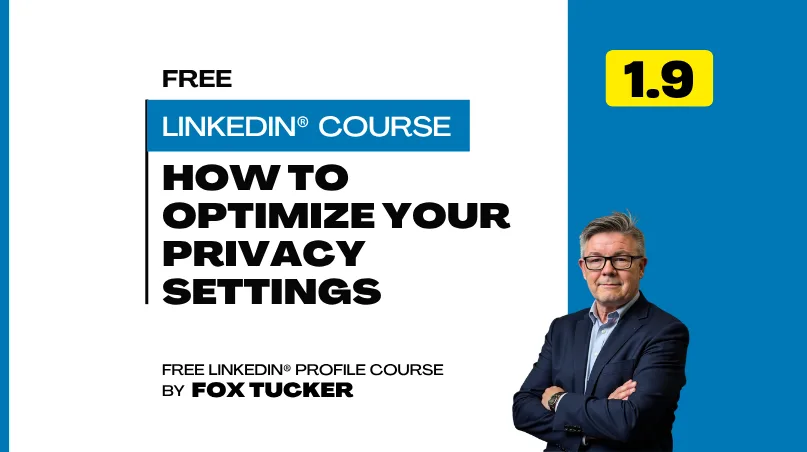
Lesson Introduction
If your LinkedIn® profile is part of your professional presence, visibility settings deserve deliberate attention. They control how you appear to other members, recruiters, search engines and permitted services outside LinkedIn®.
There is no single correct visibility setting for everyone. Your choices should reflect why you use LinkedIn®, how discoverable you want to be, and what information you are comfortable making visible.
Framework Note
Your ideal visibility settings depend partly on why you use LinkedIn®. A job seeker may place a high value on being discoverable by recruiters. Someone using LinkedIn® to build Reputation or Relationships may also benefit from broad visibility. Another user may have good reasons to keep parts of their activity or network more private.
The aim is not maximum visibility at any cost. It is the right level of visibility for your Primary Reason, alongside your own privacy preferences. Explore the Why Are You Really on LinkedIn®? framework →
The Importance of Privacy Settings
- Control: Decide who sees your profile, updates, and activity.
- Visibility: Balance being discoverable while maintaining privacy.
- Customization: Tailor your LinkedIn® experience to suit your professional goals
Key Privacy Settings to Review
- Profile Viewing Options: When you view someone’s profile, LinkedIn® currently offers three viewing modes: your name and headline, private profile characteristics, or private mode. Consider your objectives: Do you want to be fully visible for networking, or do you prefer browsing anonymously at times?
- Profile Visibility on Search Engines: Decide if your LinkedIn® profile should be visible to search engines. If you’re building your brand or open to opportunities, maximizing visibility will be beneficial.
- Connections Viewing: Control who can see your connections. If you’re a connector or in a competitive industry, you might choose to keep your network private.
- Sharing Profile Edits: When you update your profile, LinkedIn® can notify your network. You may want to turn this off when making several changes or prefer to keep certain updates private.
- Activity Visibility: Control who sees your updates and posts. If you’re active On LinkedIn®, setting this to ‘Everyone’ can enhance your visibility and engagement.
- Job Seeking Preferences: LinkedIn® lets you share that you are open to work with all members or with Recruiter users only. Recruiters-only is more discreet, but LinkedIn® states that it cannot guarantee complete privacy from your current employer.
Managing Your Privacy Settings
- Accessing Settings: Click your profile photo at the top of LinkedIn®, choose ‘Settings & Privacy’, then open ‘Visibility’ in the left-hand menu.
- Regular Reviews: Periodically review your privacy settings to ensure they align with your current professional objectives and comfort level with sharing information.
Balancing Privacy and Visibility
The key to LinkedIn® privacy settings is finding the right balance that suits your professional needs. If you’re actively networking or job seeking, leaning towards greater visibility might be more beneficial. Conversely, if privacy concerns are paramount, you may choose to restrict certain information and interactions.
CONCLUSION
Your privacy settings On LinkedIn® play a crucial role in shaping your professional presence and interactions on the platform. By carefully reviewing and adjusting these settings, you can enhance your visibility to the right audience while maintaining control over your personal information and activities.
Action
Take some time to review your LinkedIn® privacy settings. Are they aligned with your current professional goals and privacy preferences? Adjust as necessary to ensure you’re maximizing your LinkedIn® potential while safeguarding your privacy.
Where To Find Privacy Settings
- Click your photo
- Click Settings
- Click Visibility